Which wood do you use for cutlery?
Birch wood, sanded and food-safe, plus bamboo and bagasse options. The material decides the strength, the surface and the compostability claim.
Bamboo, wood and paper cutlery in 140–220 mm lengths, plus bagasse forks, knives and spoons.
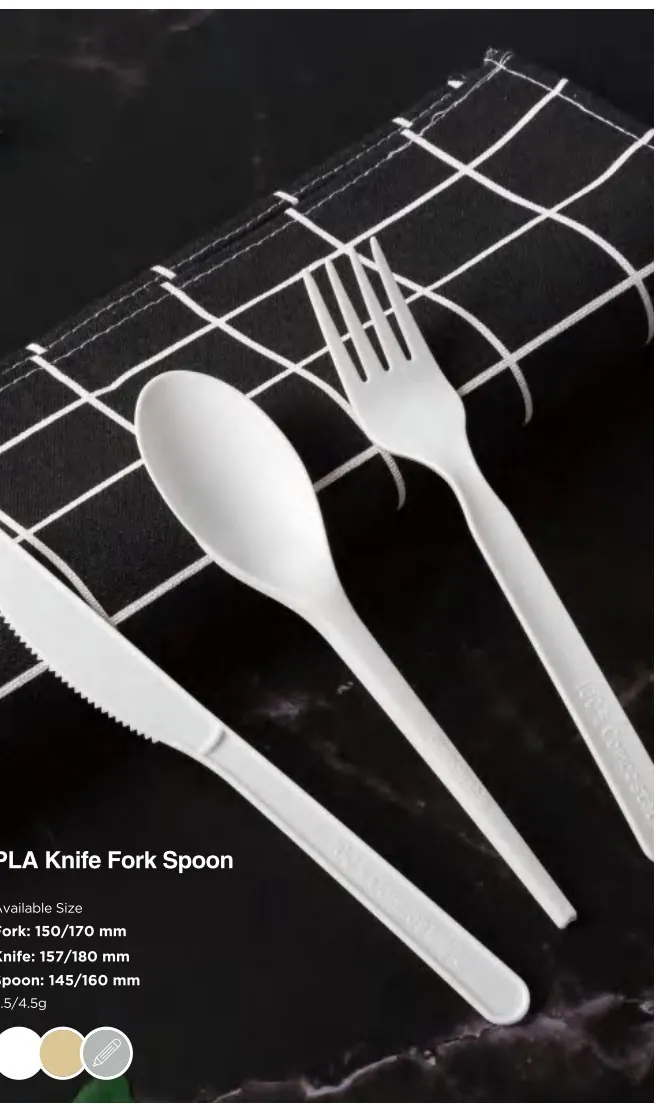
Model numbers and carton data: p. 80 of the catalogue.
The questions that come up before a sample or a purchase order. Every answer is written for this collection — not copied from a generic FAQ.
Birch wood, sanded and food-safe, plus bamboo and bagasse options. The material decides the strength, the surface and the compostability claim.
Wood and bagasse forks and spoons handle normal meals; the knife is not a steak knife. For hard or fibrous food, choose a heavier grade and test the actual dish.
From 95 mm to 220 mm depending on the material, with compact and kids' sizes quoted. Confirm the length against the plate and the portion.
Pieces are sanded and inspected; splinters are a reject. Request a sample and check the batch, especially on forks and knife edges.
Yes — print with food-grade ink, or a laser mark where the material allows. The method depends on the wood/bagasse surface; tooling is quoted per design.
Yes — paper or PLA wrapper, with or without a napkin. Wrapped sets are quoted separately from bulk cutlery.
Wood, bamboo, bagasse and PLA are compostable where the local stream accepts them and the item is certified. Confirm the certificate for the exact material.
Wood is neutral and uncoated. If taste is critical, request a sample; storage away from moisture keeps the wood clean.
MOQ is quoted per material, model and packing. Stock cutlery can start small; printed or wrapped sets depend on the run.
Bulk cartons or wrapped sets, with carton dimensions and weights in the quotation. Retail-ready and napkin kits are quoted separately.
Send model numbers and quantity. We reply with FOB pricing and lead time.